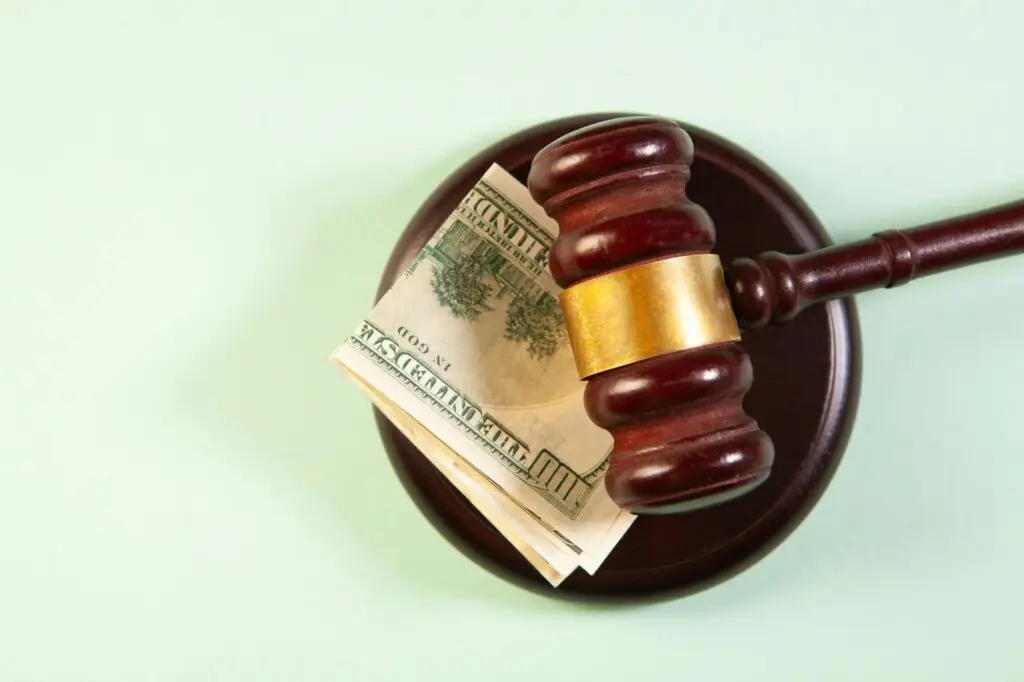
Bail is a legal mechanism that allows someone accused of a crime to be released from jail before trial, in exchange for a financial guarantee they will return for all required court appearances. Understanding what does bail mean can make the difference between spending weeks in custody and going home the same night. A judge sets the amount, and it can be paid in full with cash, secured through property, or arranged through a licensed bail bondsman.
According to the Prison Policy Initiative, on any given day, more than 460,000 people sitting in U.S. jails have not been convicted of any crime; they are simply waiting for their case to move forward. For most of them, bail determines whether that wait happens at home or behind bars. This guide breaks down how the system works, what your realistic options are, and exactly what to expect once bail is set.
What Does Bail Mean?
The bail definition legal professionals use comes down to one core idea: a financial guarantee that a defendant will return to court. When a judge sets bail, they give the accused a clear path to freedom before trial. The court holds that money or bond as leverage until the case reaches a conclusion.
Bail has been part of the U.S. legal system for centuries. Actually, the concept traces back to English common law, long before the country was founded. Over time, the system developed into the structured process that courts rely on today.
A person released on bail still faces all their original charges. That release simply means the case continues outside of a jail cell, so the defendant can work, care for family, and build their legal defense.
Why Does Bail Exist in the Legal System?
The importance of bail goes beyond getting someone out of jail quickly. The U.S. legal system operates on the principle that a person is innocent until proven guilty, and bail reflects that principle in a very practical way.
A judge has two competing priorities to weigh. The court wants to make sure the defendant shows up for trial, yet it recognizes that holding someone before conviction carries real costs: financial, personal, and societal. Bail creates a middle ground that serves both of those concerns at once.
The 8th Amendment to the U.S. Constitution prohibits excessive bail, giving every citizen a layer of protection against unreasonably high amounts. That protection makes bail a legal right, not just a standard court procedure.
How Is Bail Set?
A judge or magistrate typically sets bail at an initial hearing, often within 24 to 48 hours of an arrest. In some cases, a preset bail schedule determines the amount automatically based on the charge. Either way, the number the court lands on reflects several specific factors.
Here are some of the key factors a judge may consider when setting a bail amount:
- The seriousness and nature of the criminal charge
- Whether the defendant has a prior criminal record
- The defendant’s ties to the community, such as family employment or length of residency
- The likelihood that the defendant might flee before trial
- Whether the defendant could pose a safety risk to others
- Any history of missing prior court appearances
Judges in Orange County follow Florida statutes when making these decisions. The more serious the charge, the higher the bail tends to be, and, in some situations, a judge may deny bail entirely.
Common Forms of Bail
How bail works in practice depends on which type of bail the court allows and what the defendant can realistically afford. There are a few standard options available across Florida and most of the country.
Cash Bail
Cash bail means paying the full bail amount directly to the court. If the defendant attends all required hearings, the court returns that money once the case concludes. That said, not everyone has access to thousands of dollars on short notice.
Bail Bond
A bail bond involves a licensed bail bondsman who posts the full amount on the defendant’s behalf. The defendant (or a co-signer) pays a non-refundable fee, typically 10% of the total bail amount.
In Florida, the Florida Department of Insurance actually sets that premium rate, so the number stays consistent across licensed agencies. If bail is set at $20,000, the fee to the bondsman comes out to $2,000.
Property Bond
In some cases, a defendant can use property as collateral in place of cash. The court places a lien on that asset, which it can seize if the defendant fails to appear for their hearing.
Release on Recognizance
A judge may sometimes release a defendant on their own recognizance, meaning no payment is required at all. This option tends to apply to lower-level offenses where the defendant has fairly strong community ties and no significant criminal record.
What Happens After Release on Bail?
Release on bail is really just the start of the bail process. Getting out of jail does not mean the legal matter is closed; the defendant still has to follow a set of conditions the court puts in place.
Those conditions vary by case. Some are fairly standard, yet others reflect the specific details of the charge and the defendant’s background. Violating any condition gives the court grounds to revoke bail and issue a warrant for re-arrest.
Here are some conditions a court commonly attaches to a bail release:
- Regular check-ins with a pretrial services officer
- Travel restrictions that limit movement to a specific county or state
- A prohibition on contacting alleged victims or witnesses
- Drug or alcohol testing at scheduled intervals
- Surrender of a passport to prevent international travel
- Electronic monitoring through an ankle bracelet, in some cases
If a defendant misses a court date, the judge can declare the bail forfeited. That means the court keeps the money posted, or, in the case of a bond, the bail bondsman becomes responsible for paying the full amount to the court. Missing court can also trigger a bench warrant, which leads to a new arrest.
Bail vs. Bond: Understanding the Difference
The terms bail and bond tend to get used interchangeably, yet they refer to slightly different things. A clear bail vs bond distinction helps clarify exactly what someone is agreeing to.
Bail refers to the broader legal concept, the financial requirement the court sets for a defendant’s release. A bond is a specific type of arrangement where a third party, a licensed bail bondsman, guarantees the defendant’s appearance in court on their behalf.
When a bondsman posts a bond, they take on financial responsibility if the defendant skips court. That risk is precisely why the 10% premium is non-refundable. The fee covers the bondsman’s liability from the moment the bond is posted, regardless of how the case turns out.
How Bail Works in Orlando, Florida
For anyone dealing with an arrest in Orange County, the local process has a few specifics worth knowing. Bonds must be posted directly at the Orange County Jail, and the county offers expedited bond processing on weekdays between 8 a.m. and 2 p.m., which can speed up a release by several hours.
After an arrest in Orlando, the defendant goes through booking first. That process includes recording personal details, photographing, fingerprinting, and logging the nature of the charge.
A judge or a preset bond schedule then determines whether release is possible and under what conditions. In some cases, the court grants release on recognizance, yet most situations require a cash payment or a surety bond through a licensed agency.
Florida law allows defendants to pay the full bond amount directly to the jail or to work with a licensed bail bond agency. A surety bond through a bondsman typically costs 10% of the total bail amount, a more realistic option for most families facing a high bail figure.
Bail 2 GO sits directly across from the Orange County Jail on John Young Parkway, so the release process can get started the moment bail is set. The agency handles everything by phone, which is a very practical option for families who cannot get to the jail in person, and agents are available around the clock, so the time of day an arrest happens never slows things down.
Frequently Asked Questions
Can Bail Be Denied Entirely?
Yes, a judge has the legal authority to deny bail in certain situations. That decision typically comes down to the severity of the charge, the defendant’s history, and the level of risk the court believes the person presents.
Capital offenses, such as first-degree murder, are the most common cases where a judge denies bail outright. In Florida, the state constitution actually allows courts to deny pretrial release for defendants charged with specific serious crimes, particularly when the proof of guilt is strong.
A defendant who has repeatedly failed to appear in past cases or who poses a clear danger to the community may also face a denial. In those cases, the defendant stays in custody until the case reaches a verdict or a resolution.
Can the Bail Amount Be Reduced After It Is Set?
A bail amount is set at the initial hearing, yet that number is not necessarily final. Defendants and their attorneys have the right to request a bail reduction hearing if the original amount seems disproportionate to the charge or to the defendant’s financial situation.
At that hearing, the defense can present arguments for a lower amount, for example, pointing to the defendant’s steady employment, strong family ties, or a clean prior record. The judge then weighs those factors alongside the state’s position.
In Florida, a change in circumstances can also prompt the court to reconsider bail. If new information comes to light after the initial setting, say, the prosecution’s case changes significantly, either side can bring that to the court’s attention.
What Is a Co-Signer, and What Are Their Responsibilities?
A co-signer is a person who signs the bail bond contract on behalf of the defendant. By signing, that person takes on a serious legal and financial obligation that lasts for the duration of the case.
Basically, the co-signer is promising the bail bond agency that the defendant will show up to every required court date. If the defendant fails to appear, the co-signer becomes responsible for the full bail amount. The bail bond agency can pursue that person legally to recover what the court has demanded.
What Is Collateral, and When Is It Required?
Collateral is an asset that a defendant or co-signer pledges to a bail bond agency as additional security. The agency holds a claim on that asset for as long as the bond remains active.
When the bail amount is fairly high, a bond agency may ask for collateral to reduce its financial risk. Real estate is the most commonly used form, yet agencies may also accept vehicles, jewelry, or other valuables depending on their policies. The key point is that the asset needs to hold enough value to cover the full bail amount if the defendant disappears.
How Long Does the Bail Bond Process Take?
The timeline varies, yet the process can move very quickly when the right resources are in place. In straightforward cases, a defendant can sometimes be released within a few hours of bail being set.
Several factors affect how fast things move. The size and current capacity of the jail play a role, as does the time of day the arrest happens and whether a licensed bond agency can respond right away. Weekends and holidays sometimes slow processing on the jail’s end, even when the bondsman is ready to post the bond immediately.
Bail Set? Here’s Who to Call in Orlando
From understanding what does bail mean to knowing the difference between cash bail and a surety bond, the decisions made in the first hours after an arrest shape everything that follows.
At Bail 2 GO, we have served Central Florida for over 45 years, with our office located directly across from the Orange County Jail, a distinct advantage when speed matters most. Available 24/7, we offer flexible payment plans, accept all major credit cards, and can handle most bonds entirely by phone.
Contact us today and let an experienced bondsman guide you through every step toward getting your loved one home.